
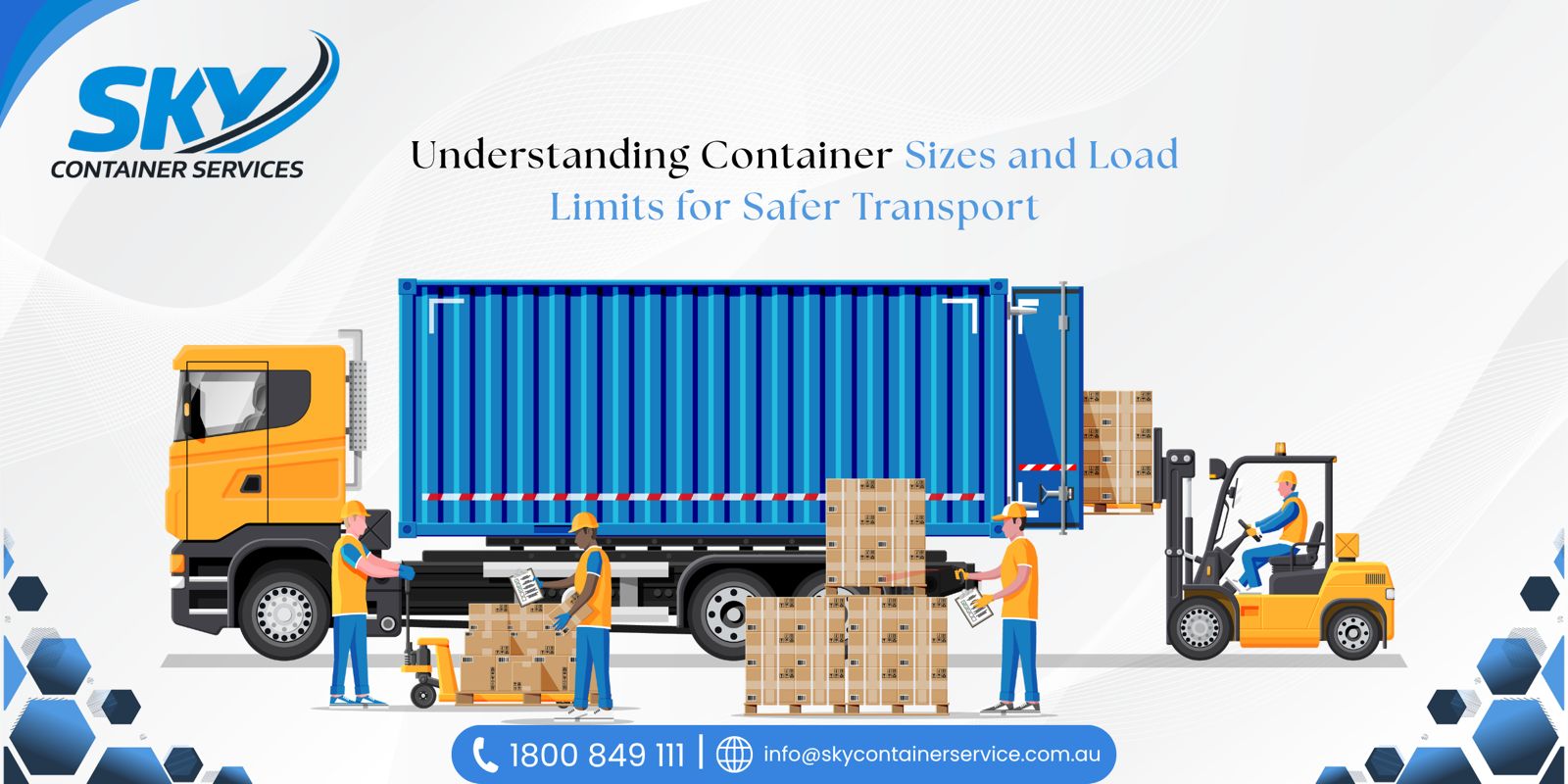
Understanding Container Sizes and Load Limits for Safer Transport
Choosing the right container is an important part of safe and efficient freight transport. Different container sizes suit different cargo, delivery requirements, and transport conditions. Therefore, businesses should understand the available options before arranging a container movement.
Sky Container Services helps businesses transport a wide range of containers across Melbourne and Australia. Their services include standard 20ft and 40ft containers, specialised units, and heavy or oversized freight.
Understanding Common Container Sizes
The most common shipping containers are 20ft and 40ft units. Businesses use these containers for many types of general freight.
However, not every shipment suits a standard container. Open-top containers can support cargo that needs additional loading height. Similarly, flat rack containers suit oversized or irregular freight that cannot fit inside a conventional enclosed container.
Sky Container Services provides transport solutions for these specialised container types. This allows businesses to select a container that matches their cargo while using suitable transport equipment.
Why Load Limits Matter
Container capacity involves more than available space. The weight of the cargo also matters. Exceeding the permitted weight can create safety risks and may lead to transport or compliance issues.
For this reason, businesses should confirm the container’s rated capacity and the cargo weight before transport. They should also consider the vehicle, road conditions, route requirements, and applicable transport regulations.
Furthermore, proper load distribution helps maintain stability during movement. Securely preparing the cargo reduces the risk of shifting and supports safer transport.
Matching Equipment to the Container
The right transport equipment can make delivery safer and more efficient. For example, Sky Container Services uses side loaders for 20ft and 40ft containers, including standard and high-cube units. These trucks can position containers accurately at restricted or difficult-access sites.
Alternatively, skel trailers provide an efficient option for moving 20ft and 40ft containers between ports, warehouses, factories, and distribution centres.
For oversized or heavy freight, Sky Container Services also provides specialised transport and project coordination. Their team can assist with route planning and required permits for over-dimensional loads.
Safer Transport Starts with Planning
Understanding container sizes and load requirements helps businesses choose the right transport solution. However, each shipment has different needs. Therefore, discussing the cargo, destination, access conditions, and delivery requirements with an experienced transport provider can prevent unnecessary problems.
Sky Container Services combines specialised equipment, experienced operators, and tailored logistics solutions to help businesses move containers safely and efficiently.
Whether you need standard container transport, specialised freight handling, refrigerated transport, or oversized load solutions, the right planning can make every delivery smoother.
Choosing the Right Container Transport Partner
Safe container transport starts before the truck arrives. By understanding your container, checking load requirements, and selecting suitable equipment, you can reduce transport risks and improve efficiency.
Sky Container Services provides container transport solutions designed around different cargo types, delivery locations, and business requirements. With the right logistics partner, businesses can keep freight moving safely from collection to final delivery.
Sky Container Services supports businesses with reliable container transport solutions, specialised equipment, and experienced operators who understand the importance of timely, safe, and efficient deliveries. Contact us now or get online quote.